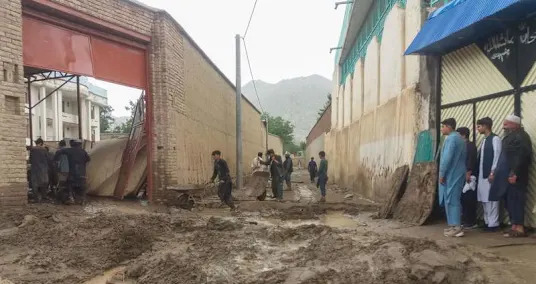
At least 61 people have been killed and 116 injured across Afghanistan since March 26 due to heavy rainfall, floods, landslides and lightning strikes, the Afghan government said on Saturday.
At least four people were still missing after floods affected thousands of families and damaged 2,448 houses, Afghan government spokesman Zabihullah Mujahid said in a post on X.
In addition, thousands of hectares of cropland was also destroyed, posing serious risks to rural communities who rely on agriculture for their livelihoods.
Deadly flooding has struck Afghanistan repeatedly in recent years, causing significant loss of life, injuries and widespread damage to homes, infrastructure and agricultural land.
Extreme weather events such as flash floods and droughts are increasing in Afghanistan, which experts link to the climate crisis.
Despite having a negligible carbon footprint, the country ranks among the most climate-affected nations and remains ill-prepared to cope after decades of conflict, poor infrastructure and a struggling economy, compounded by recent earthquakes and severe flooding.
LATEST POSTS
- 1
 Figuring out the Business venture Code: The Response to Building an Effective Startup
 - 2'Supergirl' drops 1st teaser trailer: Watch Milly Alcock as Kara Zor-El and the return of Krypto the Superdog
- 3Italy Brings In New Measures In 2026 To Tackle Overtourism
- 4Full Supreme Court to hear challenge to Judicial Selection Committee law
- 5Figure out How to Use Your Nursing Abilities for Better Compensation





- Inside the alleged Russian operation to trigger anti-government protests in Angola
- The Best Internet based Courses for Expertise Improvement
- The Force of Systems administration: Individual Examples of overcoming adversity
- Manual for 6 Hot Brilliant Beds
- Spotify Wrapped and Apple Music Replay are here: Top songs, albums and artists of 2025
- 6 Famous Urban communities for Shopping on the planet
- Coalition led by Iraqi PM al-Sudani wins parliamentary elections
- Evaluated Smartwatches for Wellness Devotees
- EU states agree first step for Ukraine reparations fund