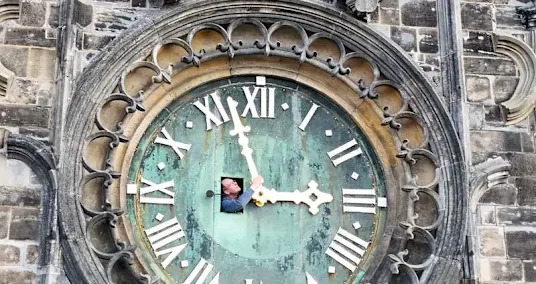
Clocks across the majority of European countries are set to go forward by one hour early on Sunday as the continent moves to daylight saving time, also known as summer time.
Clocks in most European nations including Germany advance by one hour at 2 am (0100 GMT) to 3 am, heralding longer evenings and brighter days.
This means that for the coming months parts of Europe will be on Central European Summer Time (CEST), before moving back to Central European Time (CET) in the autumn, when clocks go back again by an hour on October 25.
The aim of the change is to make better use of daylight in the shorter days of the winter in the northern hemisphere.
The signal for the automatic changeover of the clocks in Germany comes from the Federal Institute of Physics and Metrology (PTB) in the northern city of Braunschweig, also known as Brunswick in English.
The institute's experts ensure that radio-controlled clocks, station clocks and many industrial clocks are supplied with the signal via a long-wave transmitter called DCF77 in Mainflingen near Frankfurt.
LATEST POSTS
- 1
 How to watch ‘The Traitors’ U.K. Season 4 from the U.S.
 - 2The most effective method to Guarantee Simple Availability in Seniors' SUVs
- 3Make your choice for the sweet that transports you to its nation of beginning!
- 4What to watch for as NASA’s historic Artemis II crew prepares to lift off toward the moon
- 5NASA set to launch Artemis 2 moon mission today, the 1st crewed lunar flight since 1972




- Figure out How to Remain Informed about the Most recent Open Record Extra Offers
- The Best 15 Applications for Efficiency and Association
- Well known Worldwide Caf\u00e9s to Experience
- New electric car registrations rise sharply in Germany in March
- Top German court to rule on claims by Wirecard shareholders
- Vaccine makers raise concerns over US panel's shift away from hepatitis B shots for newborns
- Europe could get 42 more days of summer by the year 2100 due to climate change
- Canada cancels its 1st moon rover: 'It's hopefully not a lost cause'
- Israel’s mixed messaging on Christmas draws controversy