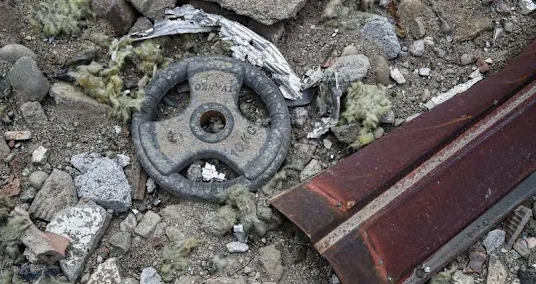
The Israeli military has said that Iran’s weapons production capabilities will be largely destroyed "within a few days."
Over the coming days, the military aims to "complete their attacks on all key components of the [Iranian] military industry," army spokesman Effie Defrin told journalists on Saturday evening.
"This means that we will have destroyed most military production capabilities," he added.
"It will take the regime a long time to rebuild them."
Since Israel and the US began to attack Iran four weeks ago, the Israeli Air Force has been carrying out heavy strikes on Iran's military industry.
The Israeli military estimates that it has already struck around 90% of the key facilities in the Iranian arms industry, according to the Times of Israel.
Israeli fighter jets also bombed military production facilities in Iran overnight, including the headquarters of the Marine Industries Organization which is responsible for the development and construction of warships and submarines.
LATEST POSTS
- 1
 'Inflaming tensions': Bedouin mayor slams Ben-Gvir's unauthorized visit after meeting cancellation
 - 2Shipping: The Corridors of Trade and the Coming of Another Period
- 3What is the 'Survivor 50' Challenge? Hidden immunity idols will be up for grabs in every U.S. state.
- 4China and Pakistan issue five-point peace plan for Middle East
- 5The pinch at the pump continues on




- 5 Home EV Chargers for Proficient and Solid Charging
- Poland identifies two Ukrainian suspects in railway sabotage blast
- Netanyahu leads meeting on West Bank riots, Katz defends axing administrative detention for Jews
- Jupiter and the moon take a sunset stroll on March 26. Here's how to see it
- AI is making spacecraft propulsion more efficient – and could even lead to nuclear-powered rockets
- Instructions to Pick the Right Dental Embed Trained professional: An Exhaustive Aide
- The Following Huge Thing: 5 Progressive Tech New businesses
- How to identify animal tracks, burrows and other signs of wildlife in your neighborhood
- I spent the last year transforming my life. Becoming a Rockette for a day made me confront a fear I couldn't shake.