Underwater archaeologists announced Monday they had discovered the 2,000-year-old wreck of an ancient Egyptian pleasure boat off the coast of Alexandria.
Divers found the vessel's hull, which was more than 115 feet long and about 23 feet wide, submerged in the port of the island of Antirhodos, the European Institute for Underwater Archaeology (IEASM) said in a statement.
There was Greek graffiti on the vessel that "could date from the first half of the first century AD" and "supports the hypothesis that the ship was built in Alexandria."
The boat "would have had a luxuriously decorated cabin and appears to have been propelled solely by oars," the Alexandria-based institute added.

Alexander the Great founded the city of Alexandria in 331 BC. A series of earthquakes and tidal waves that struck its coast submerged the island of Antirhodos, which was discovered in 1996.
Over the years, divers have recovered statues, coins and other treasures there, with some on display at the Greco-Roman Museum in Alexandria.
IEASM director Franck Goddio recently published a report on Antirhodos and its Temple of Isis, based on underwater exploration carried out since the 1990s.
"It's extremely exciting because it's the first time ever that such a boat has been discovered in Egypt," Goddio told the Guardian of the latest discovery. "Those boats were mentioned by different ancient authors, like Strabo, and they were also represented in some iconography – for example, in the Palestrina mosaic, where you see such a boat of a much smaller size with noblemen hunting hippopotamuses. But [an actual boat] has never been discovered before."
Future research on the recently discovered wreck "promises to be a fascinating journey into the life, religion, wealth and waterway pleasures of ancient Roman Egypt," the institute said.
Alexandria is home to ancient ruins and historic treasures, but Egypt's second-largest city is especially vulnerable to climate change and rising sea levels, sinking by more than three millimeters every year.
Even in the United Nations' best-case scenario, a third of Alexandria will be underwater or uninhabitable by 2050.
Multiple shipwrecks have been found in the bay, including the wreckage of Napoleon's fleet from the 1798 Battle of the Nile. Earlier this year, a well-preserved boat measuring about 20 feet long was discovered by IEASM in the eastern harbor of Alexandria, according to a podcast posted by the Hilti Foundation.
In August, archaeologists announced that ancient statues, Roman coins and other artifacts from Alexandria were pulled from the Mediterranean Sea.

Authorities said that the site may be an extension of the ancient city of Canopus, a prominent center during the Ptolemaic dynasty, which ruled Egypt for nearly 300 years, and the Roman Empire, which governed for around 600 years.
The announcement of the pleasure boat discovery comes just days after archaeologists revealed that 225 funerary figurines were found inside a tomb in the ancient Egyptian capital of Tanis in the Nile Delta.
Republican and Democratic strategists react to Marjorie Taylor Greene's comments on Trump
LATEST POSTS
- 1
 Bomb blast in packed Nigerian mosque kills five
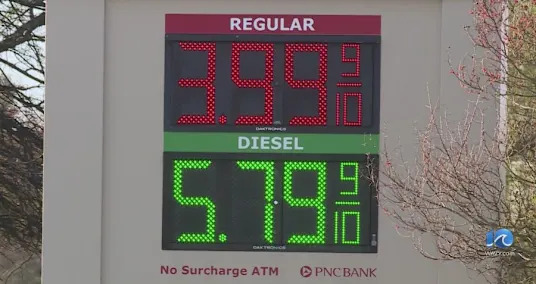
 - 2Pain at the pump for Hampton Roads residents
- 3New movies to watch this week: See 'Marty Supreme' in theaters, rent 'Springsteen: Deliver Me from Nowhere,' stream 'Cover-Up' on Netflix
- 4Flu season is ramping up, and some experts are "pretty worried"
- 5Misinterpretations and Mistakes Portrayed by Hollywood in the General set of laws



- Ukrainian man arrested in Germany on suspicion of spying for Russia
- IDF Givati Brigade soldier arrested, charged in suspected Iran espionage
- 9 African migrants died in freezing temperatures near Morocco-Algeria border
- How much would you pay to meet a Real Housewife? At BravoCon, the limit does not exist.
- Vote In favor of Your Favored Kind Of Attire
- The Best Traditional Music Arrangers in History
- Asia's Noteworthy Destinations: A Voyager's Aide
- 'The Boys' Season 5 premiere: How to watch for less, what to know about the final series and more
- Iran Used $2 Billion in Crypto to Run Its Militant Proxies in 2025